Defence scale models support UK military procurement by making complex military platforms, systems, and capabilities tangible for the decision-makers, engineers, and stakeholders who shape acquisition programmes. Defence Models UK provides specialist procurement scale models for MOD establishments, DE&S teams, prime contractors, and allied nation agencies from Wootton, Bedfordshire, with over 60 years of defence-focused expertise and UK-based production that ensures every model meets the security, accuracy, and credibility demands of the procurement environment.[1][2][^3]
What Are Defence Procurement Models?
Defence procurement models are purpose-built physical defence scale models commissioned to support the decision-making, approval, and communication stages of UK military acquisition programmes.
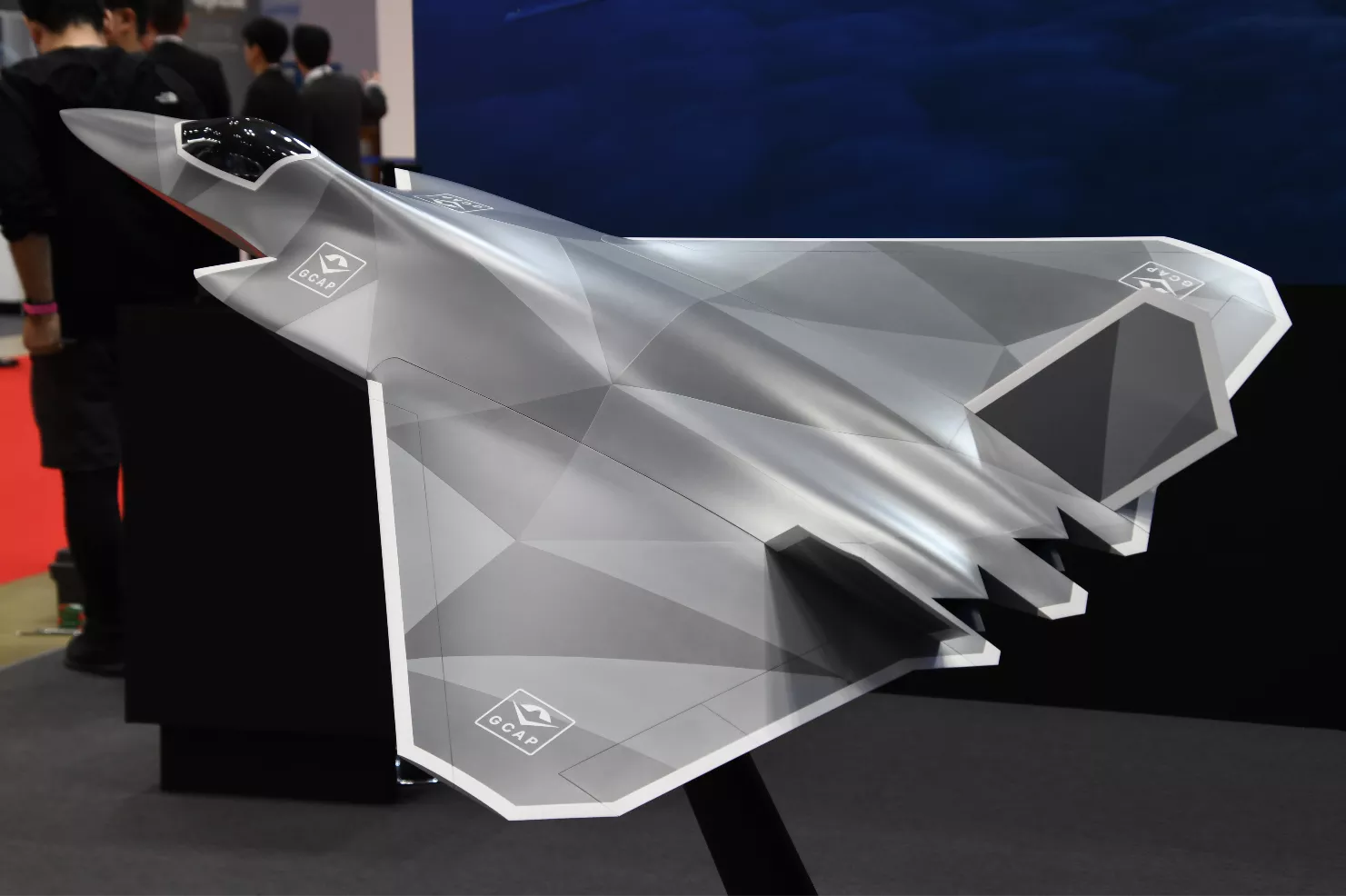
Unlike display or training models, procurement models are designed around a specific audience and a specific decision. They help procurement boards, MOD programme teams, and DE&S sponsors visualise capability options clearly, assess spatial integration, and build consensus before committing significant programme funds. They are typically used in controlled environments — internal reviews, structured customer briefings, and competitive tender presentations — rather than public-facing settings.[4][3]
Physical models remain essential in this context because they eliminate the ambiguity that persists in documentation-heavy procurement environments. When stakeholders from different disciplines — military operators, engineers, commercial managers, and finance teams — share a table with a physical model in front of them, discussion becomes grounded and concrete in a way that slide decks and digital renders rarely achieve.[4][1]
Why Physical Models Still Matter in MOD Procurement
Doesn’t digital take over?
Physical defence scale models complement digital tools rather than competing with them — and in MOD procurement environments specifically, they fill gaps that digital twins and simulation cannot.
UK defence increasingly uses digital twins, simulation, and model-based systems engineering, supported by DSTL and major primes. However, full digital collaboration has limits in the procurement environment:[3][4]
- Not all stakeholders have access to specialist software or cleared digital systems
- Network security constraints often limit what can be shared digitally in controlled briefings
- Non-technical decision-makers — ministers, senior military officers, commercial directors — engage more readily with a physical object than with a rendered model on a screen
- A shared physical reference reduces misinterpretation across disciplines and seniority levels
The National Audit Office has repeatedly highlighted that the MOD and its suppliers frequently underestimate the scope and technical complexity of major programmes — a problem rooted in communication failures across stakeholder groups. Physical procurement models directly address this by providing an unambiguous, shared reference point that all parties can interrogate together.[^3]
Where in the Procurement Lifecycle Are Models Used?
Early concept and options analysis
At concept stage, scale models help programme teams visualise competing capability options and understand spatial, integration, and interoperability constraints before requirements are locked.
Early-stage models are often lower fidelity — focused on form, scale, and configuration rather than surface detail. They support options analysis reviews, sponsor briefings, and early engagement with industrial partners. The goal is shared understanding, not technical completeness.[1][4]
Competitive tenders and controlled customer briefings
During competitive procurement phases, presentation models give bidders a powerful tool to communicate system capability clearly and consistently to the customer.
A well-designed tender model communicates architecture, scale relationships, and system integration in ways that written submissions and PowerPoint slides cannot. Prime contractors and Tier 1 suppliers use them during structured engagement sessions with MOD and DE&S assessment teams to distinguish their bid and demonstrate confidence in their solution.[4][3]
Critically, these models are designed to communicate without disclosing. Sensitive performance data, classified subsystem details, and restricted technical parameters are deliberately omitted or abstracted — the model shows what is appropriate for the briefing environment, nothing more.[1][3]
Approvals boards and business case reviews
Models support MOD approvals boards — including Initial Gate and Main Gate reviews — by helping senior decision-makers visualise what is being approved.
At approvals stages, the audience often includes senior officials and military leaders who have not been involved in the detailed technical development. A physical model closes the gap between technical programme data and executive-level understanding, supporting robust, well-informed decisions.[3][4]
Parliamentary, ministerial, and international briefings
Physical models are used in parliamentary briefings, ministerial reviews, and engagements with allied nation defence agencies to communicate UK capability clearly and credibly.
In these high-visibility contexts, a physical model carries authority that documents do not. It demonstrates programme reality and industrial capability in a format that is immediately accessible to non-specialist audiences, including overseas procurement officials and parliamentary defence committee members.[1][3]
Post-contract engineering and integration reviews
Once a contract is placed, physical models continue to support engineering integration reviews, maintainability assessments, and cross-discipline design discussions.
At this stage, sectional and cutaway models become especially valuable. They allow engineering teams to walk through access routes, maintenance sequences, and subsystem interactions in a physical format before detailed design is finalised — catching integration issues early, when changes are cheap, rather than late, when they are expensive.[4][1]
Scales Used in MOD Procurement Models
The scale of a defence procurement model is determined by its purpose, the platform being represented, the briefing environment, and practical transport and storage considerations.
| Scale | Typical use | Platform suitability |
| 1:35 | Desktop briefing models, working-level reviews | Land vehicles, weapon systems |
| 1:72 | Board-level presentations, competitive bids | Aircraft, helicopters, medium vessels |
| 1:100 | Larger exhibition and presentation pieces | Frigates, destroyers, large aircraft |
| 1:200 | Full programme overviews, infrastructure | Carriers, submarines, major facilities |
| 1:500+ | Strategic and infrastructure planning models | Bases, ports, airfields, joint facilities |
| 1:1 | Training aids, capability demonstrations | Individual equipment, crew stations |
The right scale balances visual impact against practical requirements. A 1:72 Typhoon sits comfortably on a boardroom table and reads clearly from a standing position; a 1:35 equivalent would be impractical in the same environment. Defence Models UK advises on appropriate scale during initial scoping to ensure each model serves its purpose effectively.[3][1]

What Makes a Procurement Model Credible to MOD and DE&S?
A procurement model is credible when it is technically accurate enough to withstand scrutiny from military and engineering professionals, visually clear enough to communicate to non-technical decision-makers, and security-compliant enough to use in controlled environments.
Three factors distinguish a credible procurement model from an impressive-looking but professionally inadequate one:
Technical accuracy
The model must reflect the actual platform accurately — proportions, major system locations, domain-specific features — so that technical reviewers trust what they are seeing. This requires source data (CAD files, approved drawings, or authorised reference imagery) and a model maker with deep domain knowledge who can interpret that data correctly.[1][3]
Security compliance
All source data must be handled under appropriate security protocols. Production must occur in controlled-access, UK-based facilities with encrypted communications and strict data-handling procedures. The model itself must deliberately omit classified performance data and sensitive system details, with clear agreement between client and maker on what can and cannot be shown.[3][1]
Presentation quality
The model must hold up under close inspection by senior audiences in high-stakes environments. Surface finish, livery, markings, and overall presentation signal professionalism and reinforce confidence in the programme and the bid.[4][3]
How to Brief and Commission a Defence Procurement Model
To commission an effective defence procurement model, define its purpose, audience, security classification level, desired scale, and delivery timeline before the first conversation with your model maker.
A structured brief saves time and reduces the risk of rework. When engaging Defence Models UK, the following information is most useful:[1][3]
- Purpose — Is this for a competitive bid, an approvals board, a ministerial briefing, an engineering review, or multiple uses?
- Audience — Senior military, procurement officials, engineers, ministers, or international partners? Different audiences need different fidelity and emphasis.
- Security classification — What data can be shared? What must be omitted? Are NDA and data-handling agreements in place?
- Scale and format — Tabletop, freestanding, display case, with or without base and branding?
- Timeline — When is the briefing, review, or submission? Early engagement ensures production aligns with programme milestones.
- Reuse potential — Will the model be used once or across multiple bid phases, exhibitions, and internal reviews? Reuse considerations affect material and construction choices.
Most professional defence procurement models are delivered within weeks to a few months of scope definition. Early engagement with Defence Models UK is strongly recommended for any model required to support a major programme milestone.[^3]
Why Use Defence Models UK for Procurement Scale Models?
Defence Models UK is the UK’s dedicated specialist in defence and aerospace scale models, with over 60 years of continuous production experience, complete in-house UK production, and deep technical knowledge of MOD and DE&S procurement environments.
Unlike general model makers, DMUK’s entire operation is oriented around defence applications. Controlled-access production facilities, encrypted communications, background-checked personnel, and rigorous data-handling procedures are standard on every project — not optional extras.[2][1][^3]
DMUK’s portfolio spans every domain — military vehicles, naval vessels, aircraft and aerospace systems, defence infrastructure, R&D prototypes, and exhibition models — giving procurement clients a single, trusted partner across the full lifecycle of a programme. Models are produced entirely within UK-based facilities, eliminating external security risks and providing clients with full production traceability.[2][1]
For programmes where credibility, security, and technical accuracy are non-negotiable, a specialist defence model maker is the only appropriate choice.
FAQ
How are defence scale models used in MOD procurement?
Defence scale models are used throughout the MOD procurement lifecycle — from early concept and options analysis through competitive tender presentations, approvals board reviews, and post-contract engineering integration. They give diverse stakeholder groups a shared, physically tangible reference that reduces ambiguity and supports better-informed decisions.
What scales are defence procurement models made to?
Common scales for MOD procurement models range from 1:35 for desktop briefing models of land vehicles, through 1:72 and 1:100 for aircraft and naval vessels at board level, to 1:200 or larger for infrastructure and strategic planning. Scale is chosen based on platform size, briefing environment, and practical transport and storage requirements.
How does a defence model maker protect sensitive information during procurement?
A specialist defence model maker implements controlled-access UK production facilities, encrypted communications, strict data-handling protocols, and clearly agreed limits on what can be shown in the physical model. Classified performance data and sensitive system details are deliberately omitted, and all production occurs within a secure, domestic supply chain.
Can a defence procurement model be reused across multiple bid phases and events?
Yes. Well-designed procurement models are built to be reused across competitive bid phases, internal reviews, approvals boards, and exhibitions, maximising return on investment. Reuse requirements should be discussed at scoping stage so construction and materials choices support durability and repeated transport.
For more information on how physical models are used across the UK defence sector, read our in-depth article: How Scale and Replica Models Are Used Across the Modern UK Defence Industry.
To discuss a procurement model requirement, contact Defence Models UK: defencemodels.co.uk/contact-us/
References
- Expert Defence Modelling Capabilities for Military & Aerospace | UK – Discover Defence Models UK’s defence modelling capabilities, from vehicles and naval vessels to airc…
- About DMUK | Specialist Defence Model Makers in the UK – Learn about Defence Models UK, specialist defence model makers with over 60 years’ experience delive…
- Defence Model Maker | Best Specialist Scale Models – DMUK – A defence model maker is a specialist manufacturer that produces physically accurate, scale represen…
- Scale and replica models in the UK defence Sector – This article explains where, why and how physical defence models are used today, and how they fit wi…