Specialist Defence Model Maker: The UK’s Dedicated Military Scale Model Partner
The Complete Guide to Specialist Defence Scale Models
A defence model maker is a specialist manufacturer that produces physically accurate, scale representations of military platforms, systems, and infrastructure for use in procurement, engineering, training, and stakeholder engagement within the defence sector.
Defence Models UK is the UK’s dedicated defence model maker, serving MOD, DE&S, prime contractors, and aerospace organisations from Wootton, Bedfordshire, with over six decades of established expertise, controlled-access UK production facilities, and deep technical defence knowledge that ensures every model withstands scrutiny from military and engineering professionals.
Choosing the right defence model maker is a critical decision for any organisation operating within the UK defence sector. Physical scale models remain essential tools for procurement, capability planning, training and stakeholder engagement — and the specialist knowledge required to produce them accurately, securely and to defence-grade standards sets dedicated defence model makers apart from general model-making companies.
For over six decades, Defence Models UK (DMUK) has operated as the UK’s dedicated specialist in defence, military and aerospace scale models. As the defence division of Model Products Ltd, DMUK combines traditional craftsmanship with advanced manufacturing technology to deliver precision-engineered models for the Ministry of Defence (MOD), Defence Equipment & Support (DE&S), prime contractors and defence SMEs across the United Kingdom and allied nations.
This guide explains what a defence model maker does, why specialist capability matters, how DMUK works with defence clients, and how to commission the right model for your programme.
What Is a Defence Model Maker?
A defence model maker is a specialist manufacturer that produces physically accurate, scale representations of military platforms, systems and infrastructure for use in procurement, engineering, training and stakeholder engagement within the defence sector.
Unlike general or commercial model makers, a defence model maker must understand the unique demands of the sector: security and confidentiality requirements, military specifications, classification protocols, and the operational contexts in which models will be used. Defence model making is not simply about aesthetics — it requires technical credibility that withstands scrutiny from military, engineering and procurement professionals.
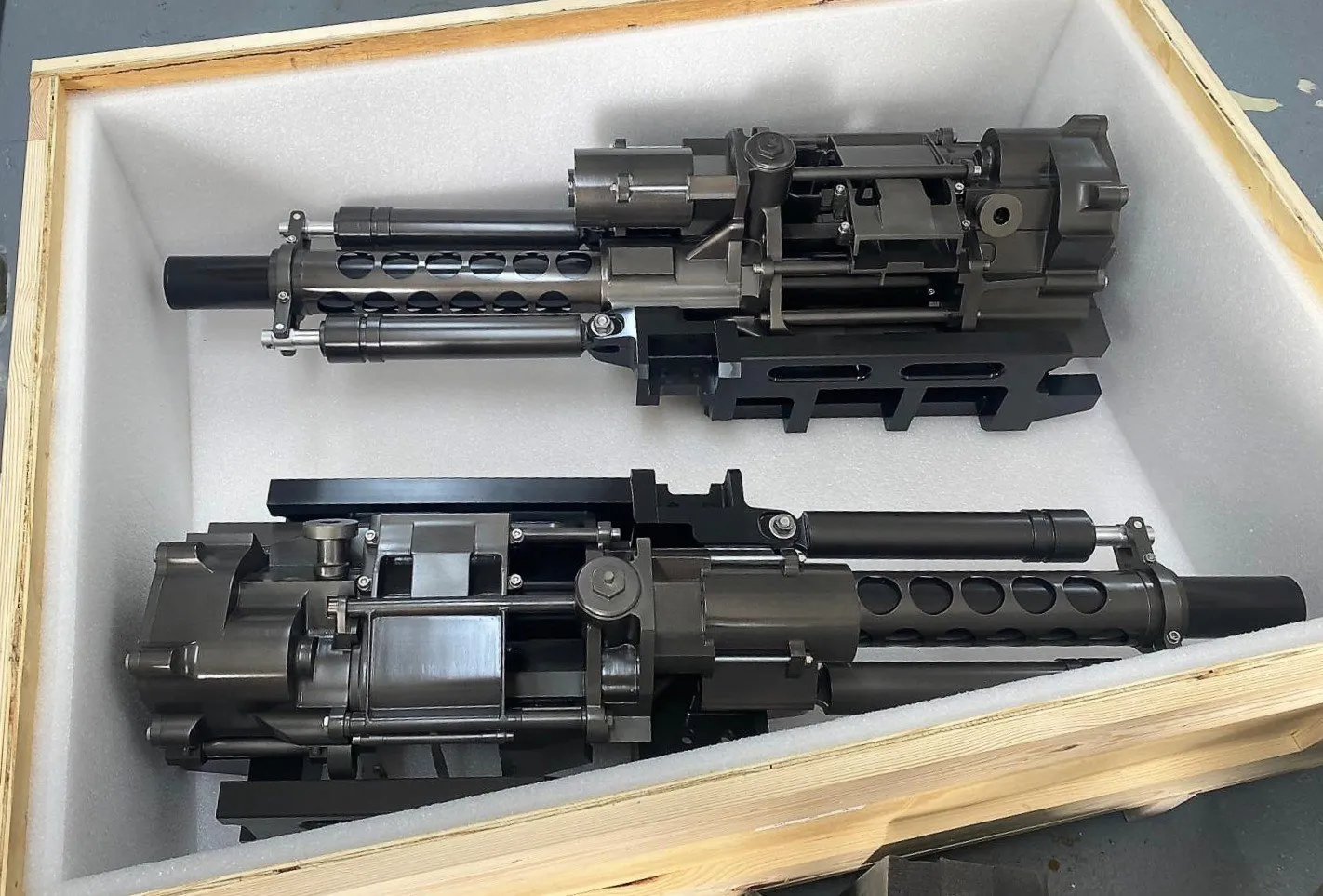
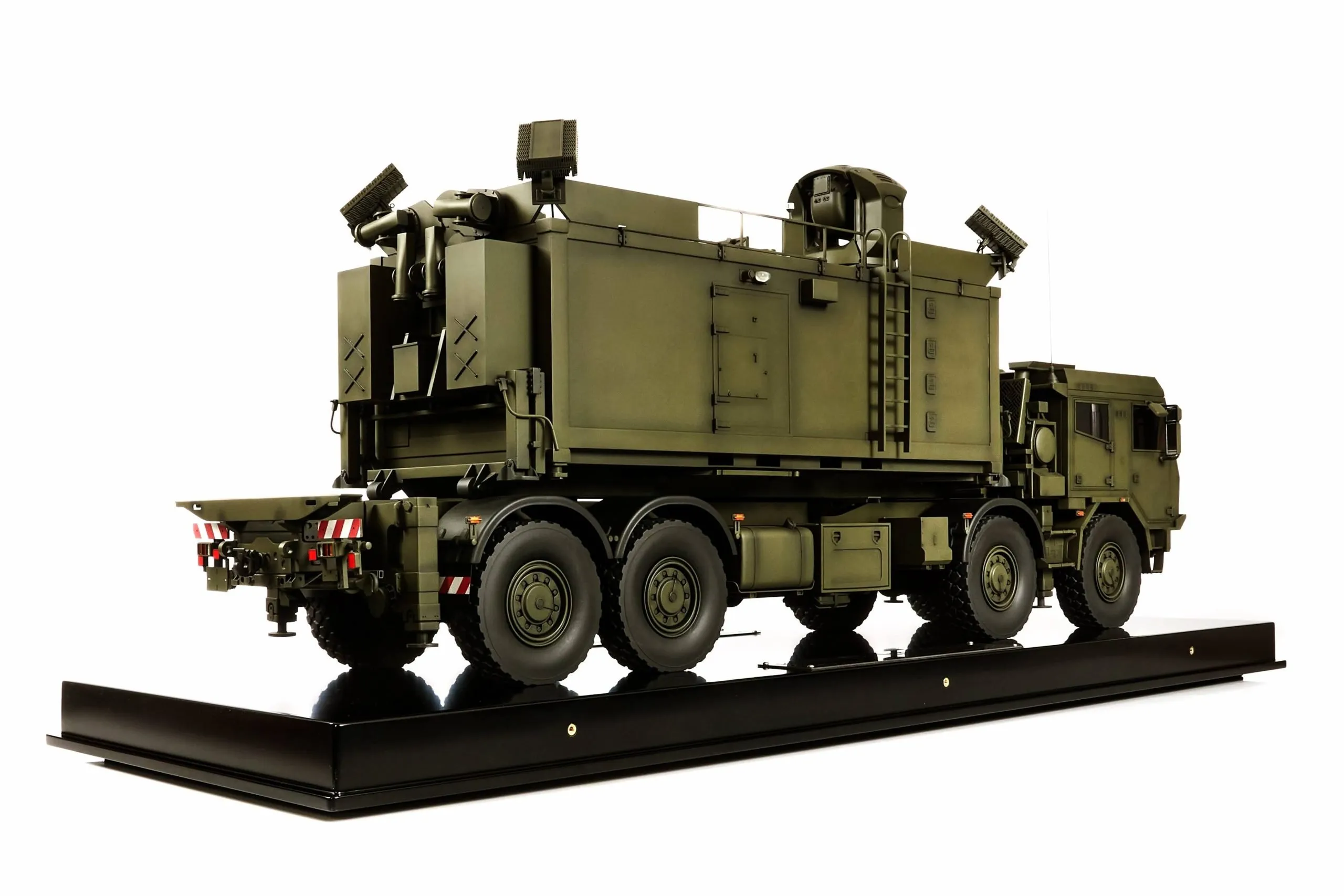
Defence scale models are typically commissioned by MOD, DE&S or defence contractors for controlled, professional environments. They may represent anything from armoured vehicles and naval vessels to aircraft systems, defence infrastructure and multi-domain capability concepts. The fidelity, scale and detail of each model are carefully governed, with deliberate decisions about what is shown and what is omitted to protect sensitive information.
Why Do Defence Organisations Need a Specialist Defence Model Maker?
Defence organisations need a specialist defence model maker because generic model makers lack the security infrastructure, technical defence knowledge and sector relationships required to deliver models that meet MOD and contractor expectations.
The UK defence environment places demands on suppliers that go well beyond standard commercial work:
Security and Confidentiality
Defence projects may involve classified or sensitive information. A specialist defence model maker implements controlled-access production facilities, encrypted communications, strict data-handling procedures and personnel background checks — measures that generic firms are not set up to provide.
Technical Credibility
Models must be accurate enough to support procurement decisions, engineering reviews and stakeholder discussions. This requires deep understanding of military equipment, naval architecture, aerospace engineering and weapons systems — not simply the ability to replicate a photograph.
Understandin of MOD Processes
A specialist defence model maker understands how DE&S manages complex acquisition programmes, what approvals boards expect, and how models will be used across the procurement lifecycle.
The National Audit Office (NAO) has consistently highlighted that the MOD’s major equipment programmes face challenges from technical complexity, cost growth and schedule delays — often rooted in misunderstood requirements and poor cross-stakeholder communication. A specialist defence model maker directly addresses these risks by providing clear, intuitive, shared understanding of what is being procured, built or fielded.
What Makes Defence Models UK a Specialist Defence Model Maker?
Defence Models UK is the UK’s dedicated specialist in defence, military and aerospace scale models, with over 60 years of established expertise, complete in-house UK production and deep technical defence knowledge.
DMUK operates as the specialist defence division of Model Products Ltd and focuses exclusively on defence applications. This matters because it means every process, capability and team member is oriented around the specific challenges of defence model making.
Heritage and experience
With more than six decades serving the defence and aerospace sectors, DMUK has built an exceptional track record. The company’s portfolio includes work for major defence contractors, military research establishments, aerospace manufacturers and government defence agencies throughout the UK and allied nations.
Complete UK-based, in-house production
All work is carried out within DMUK’s own UK facilities. This eliminates external security risks, ensures consistent quality control at every stage, and provides clients with confidence that sensitive data never leaves a controlled environment.
Technical defence knowledge
DMUK’s team includes skilled craftspeople, design engineers, project managers and defence industry specialists. Their deep understanding of military equipment, naval architecture and aerospace systems means models are technically credible — not just visually impressive.
Established defence relationships
DMUK maintains long-standing connections with MOD, DE&S and major defence contractors, and operates effectively within defence industry frameworks, procurement timelines and security expectations.
Traditional craftsmanship meets modern technology
DMUK combines time-honoured hand-crafting, painting and finishing techniques with advanced CAD/CAM systems, multi-axis CNC machining, 3D printing and laser cutting. This dual capability means the most appropriate method is selected for each project — whether the requirement demands intricate hand-finishing, precision machining or rapid digital fabrication.
What Types of Defence Scale Models Can a Defence Model Maker Deliver?
A specialist defence model maker delivers scale models across land, sea, air, infrastructure and joint domains — each tailored to audience, purpose and security requirements.
DMUK’s comprehensive capabilities span the full spectrum of defence requirements:
Military Vehicles & Equipment
Accurate scale replicas of armoured vehicles, tanks, artillery systems and ground-support equipment for training, exhibition and strategic planning.
Naval Vessels & Maritime Assets
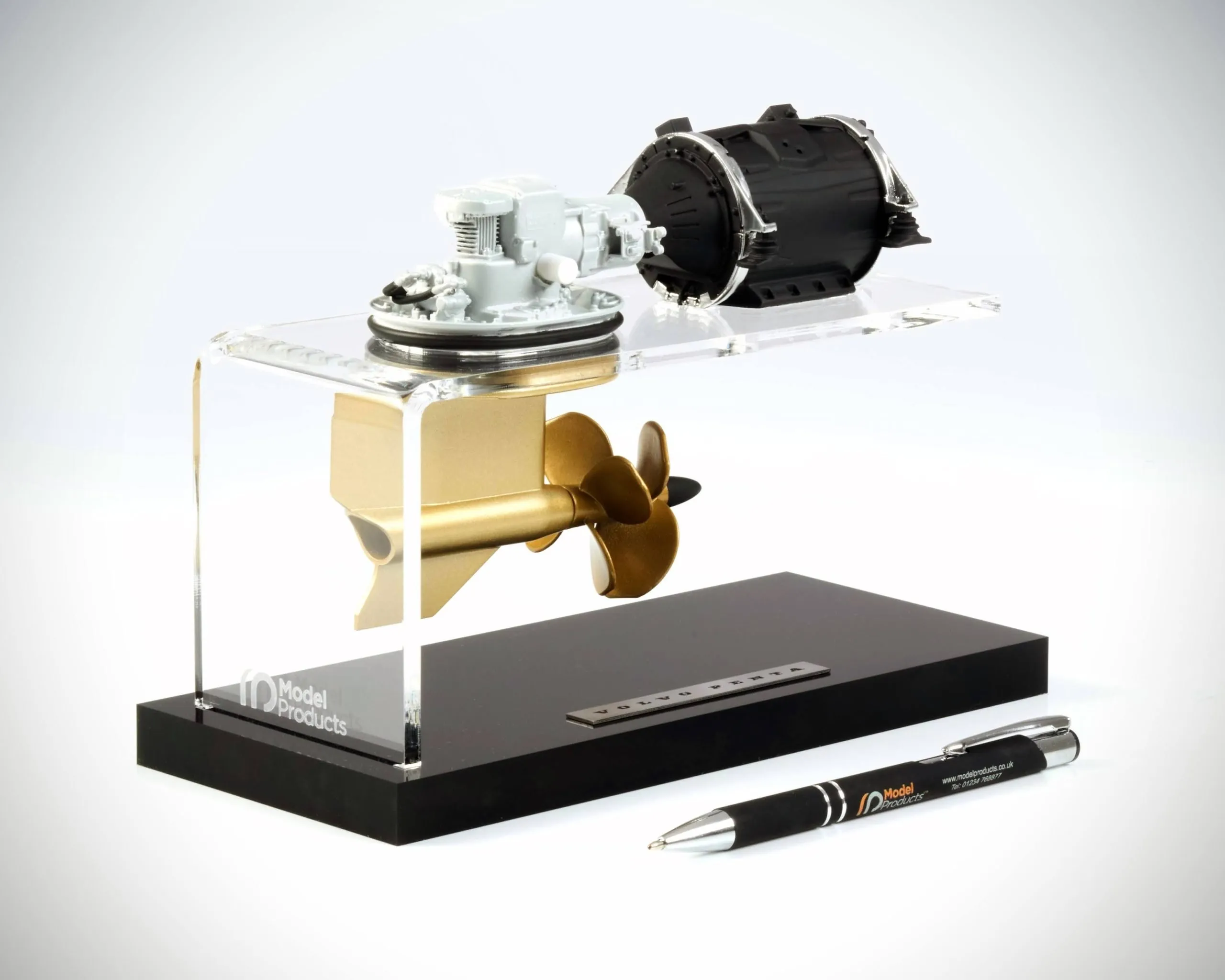
Detailed models of frigates, destroyers, submarines, patrol vessels and support craft, produced to exacting specifications for naval planning and presentation.
Aircraft & Aerospace Systems
Precision models of fighter jets, transport aircraft, helicopters, UAVs and missile systems for aerospace development and procurement.
Defence Infrastructure
Architectural models of military installations, bases, command centres and strategic facilities for planning, security assessment and stakeholder engagement.
R&D, prototype and engineering models
Models designed to support integration reviews, spatial assessments and cross-discipline engineering communication, where accuracy and proportion are prioritised over cosmetic finish.
Exhibition, presentation and training models
High-quality models for competitive bids, controlled customer briefings, training establishments and public engagement such as accredited military museums.
How Does a Defence Model Maker Work with MOD, DE&S and Defence Contractors?
A specialist defence model maker follows a structured, defence-aware process from initial scoping through to delivery, with security, quality and clear communication built in at every stage.
DMUK’s working process is designed around the realities of defence programmes:
1. Scoping and requirements
The process starts with understanding the model’s purpose, audience and context. Is it for a procurement presentation, an engineering review, a training environment or a public exhibition? This shapes every subsequent decision about scale, fidelity, materials and what detail to include or deliberately omit.
2. Security & Data Handling
Before any production begins, DMUK establishes clear agreements on data handling, classification and confidentiality. All source data is managed within controlled, UK-based facilities with strict access controls.
3. Design & CAD Development
Using advanced CAD software, the team develops precise digital designs verified against client specifications and reference data.
4. Production
Depending on requirements, production may involve CNC machining, 3D printing, laser cutting, traditional hand-crafting or a combination. Every stage is subject to in-process quality inspection.
5. Quality Assurance
Rigorous checks at multiple stages ensure dimensional accuracy, finish quality and adherence to specification. Comprehensive documentation provides full traceability.
6. Client Approval & Delivery
Clients are given approval opportunities before final delivery. Models are delivered on schedule, within budget and ready for their intended use.
Defence projects often operate under stringent timelines and budgetary constraints. DMUK’s project management approach is structured to meet these challenges, whether the requirement is a single bespoke model for a specific briefing or a fleet of models for a major programme.
How Do Defence Model Makers Support Procurement, Capability and Training?
Defence model makers support the full lifecycle of defence capability — from early concept and procurement through engineering development, training and public engagement — by providing clear, intuitive and secure physical references.
Procurement and capability decisions
Scale models help DE&S and MOD programme teams visualise capability options, system integration and spatial constraints. They support structured discussions, approvals boards and business cases by making abstract concepts tangible. The NAO’s Equipment Plan report highlights a £16.9 billion affordability gap and increased cost pressures driven partly by the complexity of major programmes — clarity tools like physical models help decision-makers understand implications before committing resources.
Competitive bids and stakeholder engagement
Defence presentation models help bidders communicate capability clearly during competitive tenders and controlled customer briefings. Well-designed models can be reused across bid phases, exhibitions and internal engagement, improving return on investment. Clear communication is especially important given the NAO’s finding that “the Department and suppliers underestimate the scope and technical complexity” of major programmes.
Engineering development and integration
Physical models provide tangible reference points when multiple subsystems interact. Engineering teams use sectional or cutaway models to review access, maintainability and integration issues before committing to costly design changes. RUSI has consistently highlighted capability integration as a recognised challenge across UK defence programmes.
Training, museums and public engagement
Models make defence capability understandable without exposing operational systems. Training establishments use simplified models to explain platform layouts, while museums and heritage organisations aligned with the Armed Forces Covenant use high-fidelity replicas for education and public engagement.
For a detailed breakdown of how models are used across these areas, see our pillar article: How Scale and Replica Models Are Used Across the Modern UK Defence Industry.
How Do Physical Models Complement Digital Twins and Simulation?
Physical models complement digital twins by providing shared, intuitive understanding that supports discussion and decision-making — particularly in multi-stakeholder defence environments where not everyone has access to specialist software.
UK defence increasingly uses digital twins and simulation, supported by organisations such as DSTL. However, physical models remain valuable because they:
- Provide immediate, hands-on understanding without software licences or technical training
- Anchor cross-functional discussions while digital data is referenced selectively
- Function in environments where IT access, network connectivity or security constraints limit digital tools
- Offer a shared, unambiguous reference point that reduces misinterpretation
The most effective defence programmes use both tools strategically. A digital twin may drive detailed engineering analysis while a physical model anchors high-level procurement reviews, stakeholder briefings or training sessions. They are complementary, not competing.
What Should You Look for When Choosing a Defence Model Maker?
When choosing a defence model maker, look for proven defence experience, robust security practices, technical accuracy, complete in-house UK production and a track record of delivering to defence timescales and standards.
Key criteria include:
- Demonstrated defence and aerospace track record. Has the company delivered models for MOD, DE&S or recognised defence contractors? Experience within defence environments is not easily replicated.
- Security infrastructure. Does the company operate controlled-access facilities, encrypted communications and strict data-handling protocols? Can personnel obtain security clearances if required?
- Technical credibility. Can the company produce models that withstand scrutiny from military and engineering professionals — not just visually appealing replicas?
- In-house, UK-based production. Outsourcing or offshoring introduces security and quality risks that defence clients cannot afford.
- Scalable project management. Can the company handle tight timelines, evolving requirements and projects ranging from a single bespoke model to large-scale multi-unit contracts?
- Quality assurance and traceability. Does the company provide documented quality verification, in-process inspection and full traceability aligned with recognised standards?
- Understanding of purpose. Does the company understand how models will be used — whether for procurement, engineering, training or public engagement — and tailor its approach accordingly?
Early engagement with a specialist partner helps define scope, scale and appropriate fidelity, reducing risk of rework and ensuring the model serves its intended purpose effectively.
How to Brief and Commission a Defence Model Maker Effectively
To commission a defence model maker effectively, prepare clear information on the model’s purpose, audience, scale, classification constraints and delivery timeline before the first conversation.
Practical steps:
1. Define the Purpose
Is the model for a procurement presentation, engineering review, training aid, exhibition or public display? This drives every design decision.
2. Identify the Audience
Senior military officers, procurement boards, engineering teams and the public all have different needs. A defence model maker will tailor fidelity and detail accordingly.
3. Establish classification and security boundaries
Using advanced CAD software, the team develops precise digital designs verified against client specifications and reference data.
4. Agree Scale & Fidelity
Larger, higher-fidelity models suit boardroom presentations and exhibitions; smaller, simpler models may be more appropriate for working engineering discussions.
5. Set Realistic Timelines
Most professional defence models are delivered within weeks to a few months, depending on complexity. Early engagement ensures milestones align with programme dates.
6. Discuss Reuse
Most professional defence models are delivered within weeks to a few months, depending on complexity. Early engagement ensures milestones align with programme dates.
To discuss your requirements with a specialist, contact Defence Models UK.
Frequently Asked Questions
What does a defence model maker do?
A defence model maker produces physically accurate, scale representations of military platforms, systems and infrastructure. These models support procurement decisions, engineering reviews, training and stakeholder engagement within UK defence, built to defence-grade security, accuracy and quality standards.
How is a defence model maker different from a general model maker?
A specialist defence model maker operates with controlled-access facilities, strict data-handling protocols, deep technical defence knowledge and established MOD/contractor relationships. General model makers typically lack the security infrastructure and sector understanding that defence work demands.
How does a defence model maker protect sensitive information?
Through controlled-access production facilities, encrypted communications, strict confidentiality agreements, background-checked personnel and compartmentalised operations. Models are also designed to deliberately omit sensitive performance or classified data.
What information should I provide when commissioning a defence model maker?
You should define the model’s purpose, intended audience, scale, classification constraints, delivery timeline and any specific technical references. A specialist defence model maker will guide you through scoping to ensure the right approach.
How long does it take a defence model maker to deliver a bespoke model?
Timelines vary by complexity, scale and fidelity, but most professional defence models are delivered within weeks to a few months following scope definition. Early engagement helps align delivery with programme milestones.
Can a defence model maker support procurement, training and public engagement with the same model?
In some cases, yes — well-designed models can be reused across bid phases, training environments and exhibitions. However, different contexts may require different levels of fidelity or security, so this should be discussed during scoping.
Approved Sources
- Defence Models UK – https://defencemodels.co.uk
- Defence Models UK Capabilities – https://defencemodels.co.uk/capabilities/
- Defence Models UK Services – https://defencemodels.co.uk/services/
- Defence Models UK About – https://defencemodels.co.uk/about-dmuk/
- How Scale and Replica Models Are Used Across the Modern UK Defence Industry – https://defencemodels.co.uk/how-scale-replica-models-are-used-uk-defence/
- Ministry of Defence – https://www.gov.uk/government/organisations/ministry-of-defence
- Defence Equipment & Support (DE&S) – https://www.gov.uk/government/organisations/defence-equipment-and-support
- Defence Science and Technology Laboratory (DSTL) – https://www.gov.uk/government/organisations/defence-science-and-technology-laboratory
- National Audit Office – The Equipment Plan 2023 to 2033 – https://www.nao.org.uk/reports/equipment-plan-2023-to-2033/
- National Audit Office – Improving the Performance of Major Equipment Contracts – https://www.nao.org.uk/reports/improving-the-performance-of-major-equipment-contracts/
- RUSI – https://www.rusi.org/
- ADS Group – https://www.adsgroup.org.uk/
- Make UK – https://www.makeuk.org/
- BSI Group – https://www.bsigroup.com/en-GB/
- UKAS – https://www.ukas.com/
- Armed Forces Covenant – https://www.armedforces.co.uk/
- Model Products Ltd – https://modelproducts.co.uk
#DefenceModelMaker #DefenceModels #DefenceModelsUK #MilitaryModels #AerospaceModels #DefenceScaleModels #UKDefence #MOD #DES #DefenceProcurement #DefenceIndustry #ScaleModels #MilitaryScaleModels #NavalModels #DefenceTraining #DefenceEngineering #CapabilityIntegration #StakeholderEngagement #PresentationModels #DefenceSupplyChain
Authorised by DMUK
Defence Models UK is the UK’s dedicated specialist in defence, military and aerospace scale models. Operating as the defence division of Model Products Ltd, DMUK brings over 60 years of model-making experience to MOD establishments, DE&S teams, defence contractors and aerospace organisations. Combining technical defence knowledge, secure UK-based production and advanced manufacturing technology, DMUK delivers accurate, defence-grade models for procurement, planning, training and public engagement.
Proven Track Record in Defence & Aerospace
With more than 60 years of established expertise serving the defence and aerospace sectors, we bring unparalleled experience to every commission. Our portfolio includes work for major defence contractors, military research establishments, aerospace manufacturers, and government defence agencies throughout the United Kingdom and allied nations.






This extensive experience means we understand the technical requirements, security expectations, and quality standards that defence work demands. We are familiar with military specifications, classification protocols, and the operational contexts in which our models will be used; knowledge that translates directly into superior outcomes for our clients.